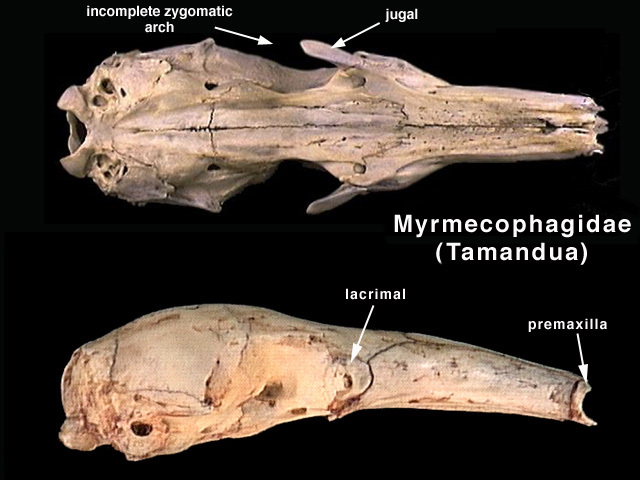
Composed of orders Cingulata and Pilosa
Distribution - Neotropics (and Cingulata invading N. America)
Position in the Eutherian phylogenetic tree (Murphy et al. 2001)
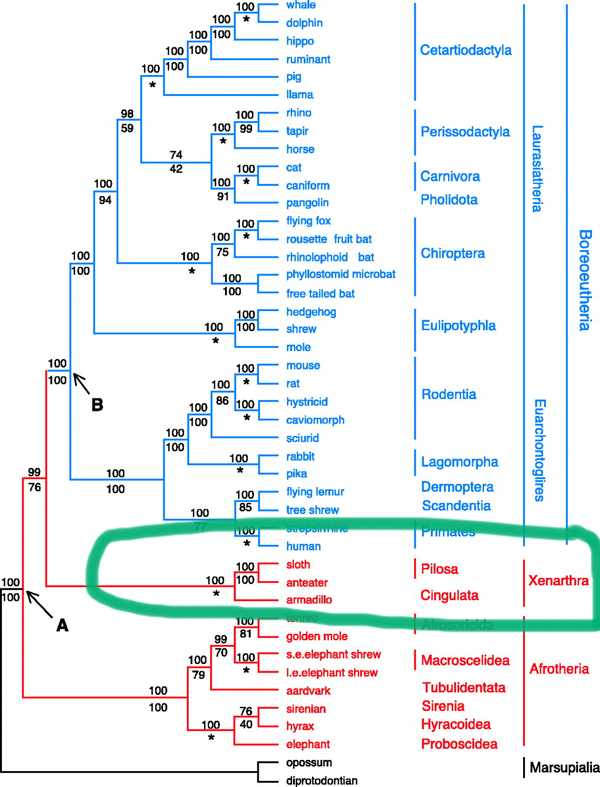
- General characteristics of these orders
- A tendency towards rigidity of the spine
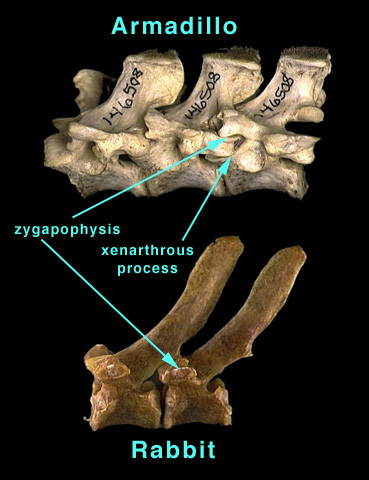
- Xenarthran processes on vertebrae (especially lumbar)
- Fusion of vertebrae with pelvic girdle
- Fusion of cervical vertebrae
- Were once very diverse; some interesting ones:
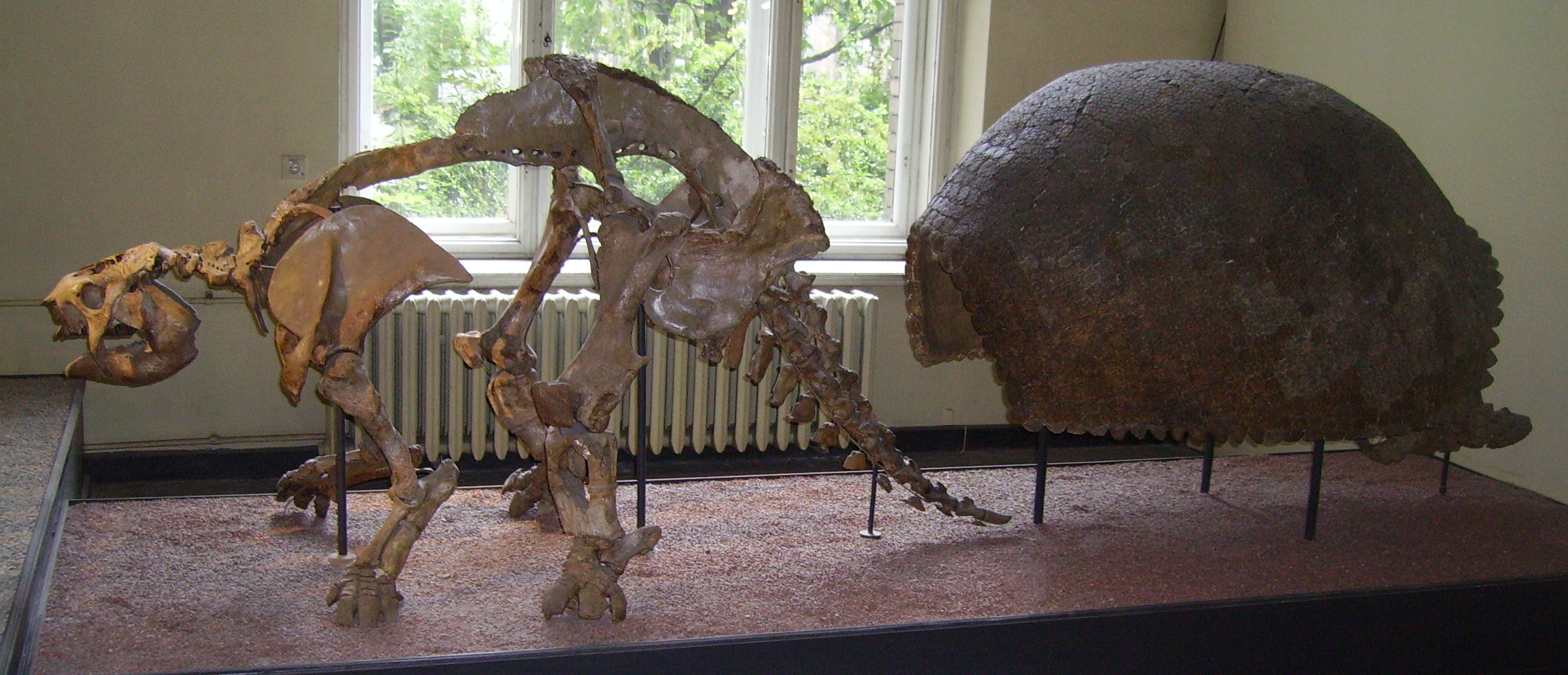
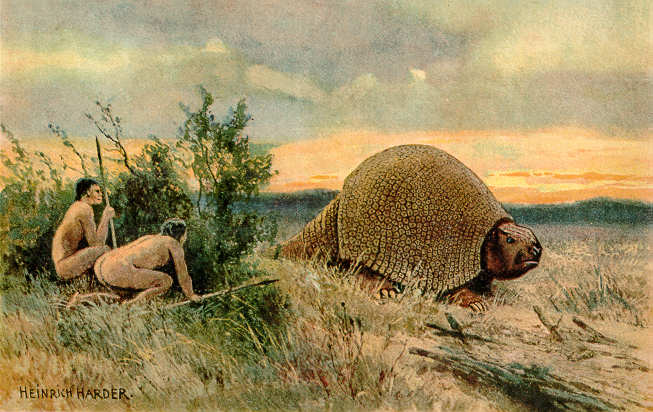
- glyptodonts: had turtle-like shell; most completely armored of all vertebrates
fossil skeleton
artist's rendering
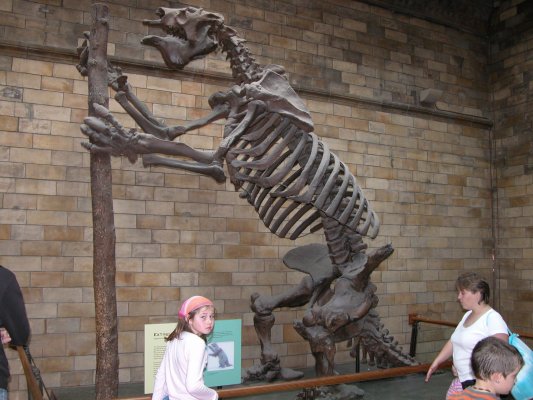
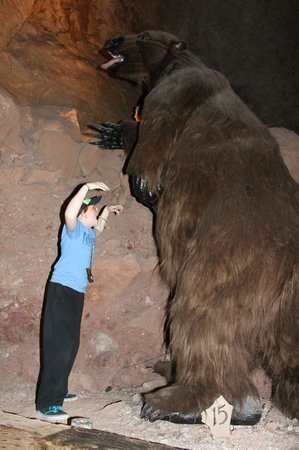
- Megalonyx : giant ground sloth
fossil skeleton
museum reconstruction
artist's rendering
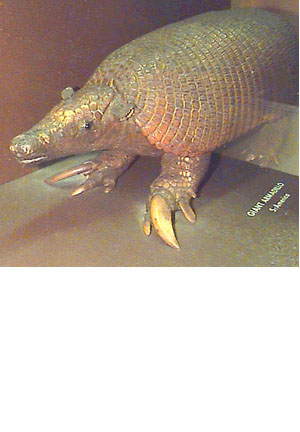
- Order Cingulata
- Characteristics
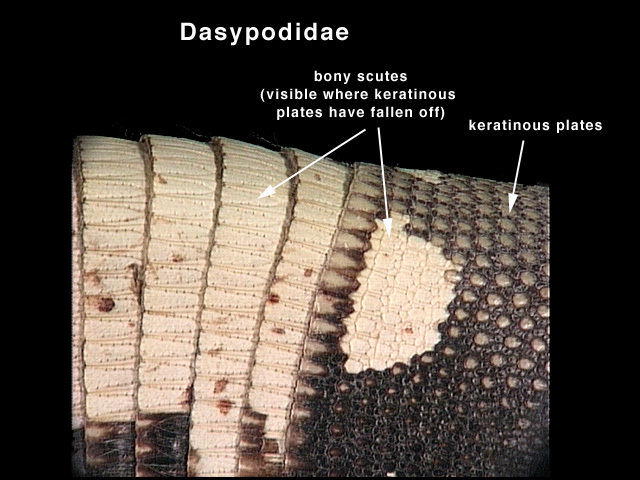
- Carapace
- covers most of the body
- made of dermal bone plates covered by epidermal scales
- varies from a complete protective covering when animals roll
into a ball, to a more loose fitting one that doesn't
completely cover
- attached to axial skeleton by muscles and ligaments (not in direct
contact with the skeleton)
- Sparse hair
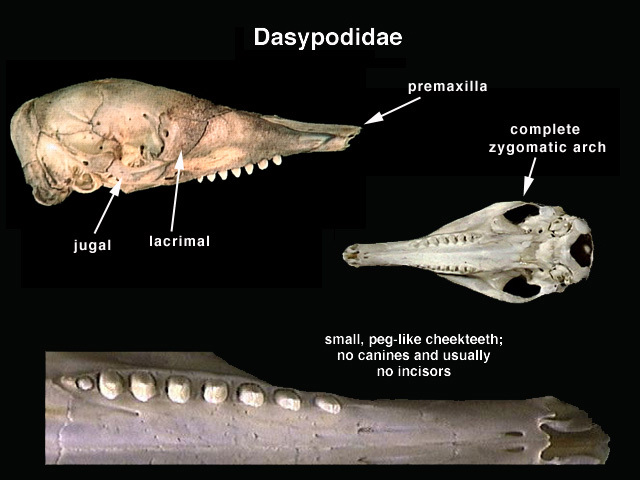
- Teeth
- Lack incisors and canines
- Teeth are cylindrical and rootless
- Most are terrestrial, some fossorial
- Well equipped for digging
- Eat insects and insect larvae, with occasional plant material,
eggs, berries, etc.
- Family Dasypodidae (armadillos) - 8 genera, 20 species
- Order Pilosa
- General characteristics of Families Bradypodidae and Megalonichidae (sloths)
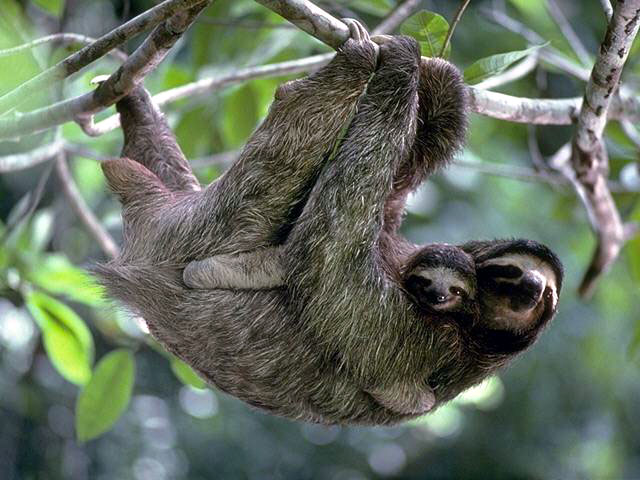
- Arboreal (have great difficulty moving on the ground) video
- Often move upside-down on the underside of branches
- Long-limbed, with forelimbs longer than hind
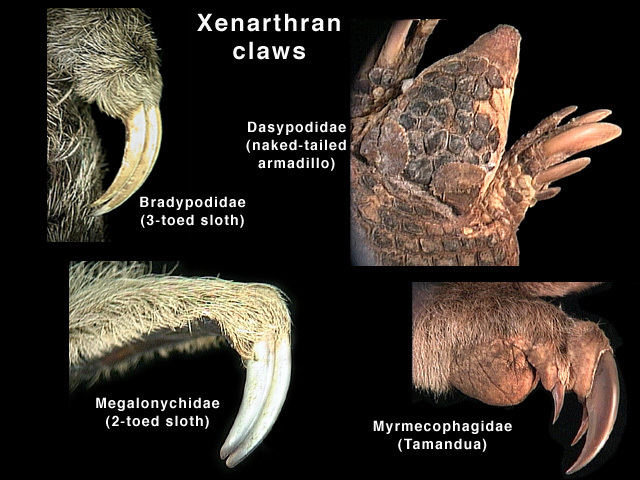
- Toes are fused ( syndactyly )
- Cervical vertebrae are variable in number (6-9)
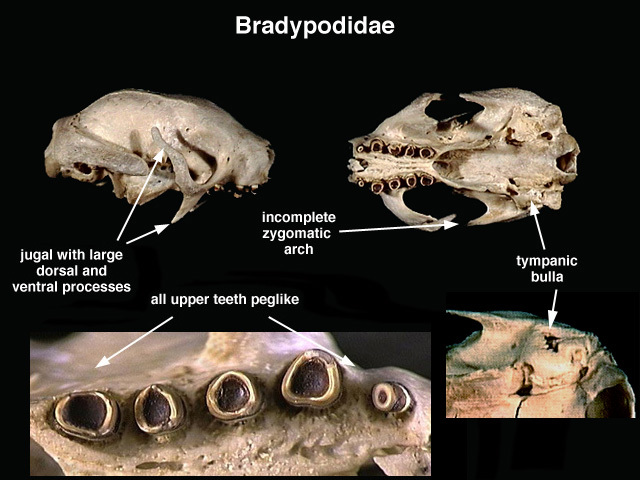
- Teeth
*Lack incisors and canines
*Cylindrical, homodont, rootless teeth
- Rudimentary tail
- Long, coarse hair on which blue-green algae grows
- Herbivorous: eat buds, flowers, fruit
- Very, very low metabolic rate and poor temperature regulation
- Family Bradypodidae (3-toed sloths): 1 genus, 3 species
skull
- Family Megalonychidae (2-toed sloths): 1 genus, 2 species
skull
- General characteristics of Family Myrmecophagidae (anteaters)
- Very long, tubular rostrums, very small mouths
- Long, sticky tongue that moves rapidly
- No teeth
- Insectivorous
- Crush insects with thickened stomach (pyloric portion)
- Have large front claws for opening up termite mounds, tearing
up rotting logs, etc.
- Family Myrmecophagidae - 3 genera, 4 species
- giant
anteater
- tamandua
- silky pygmy anteater