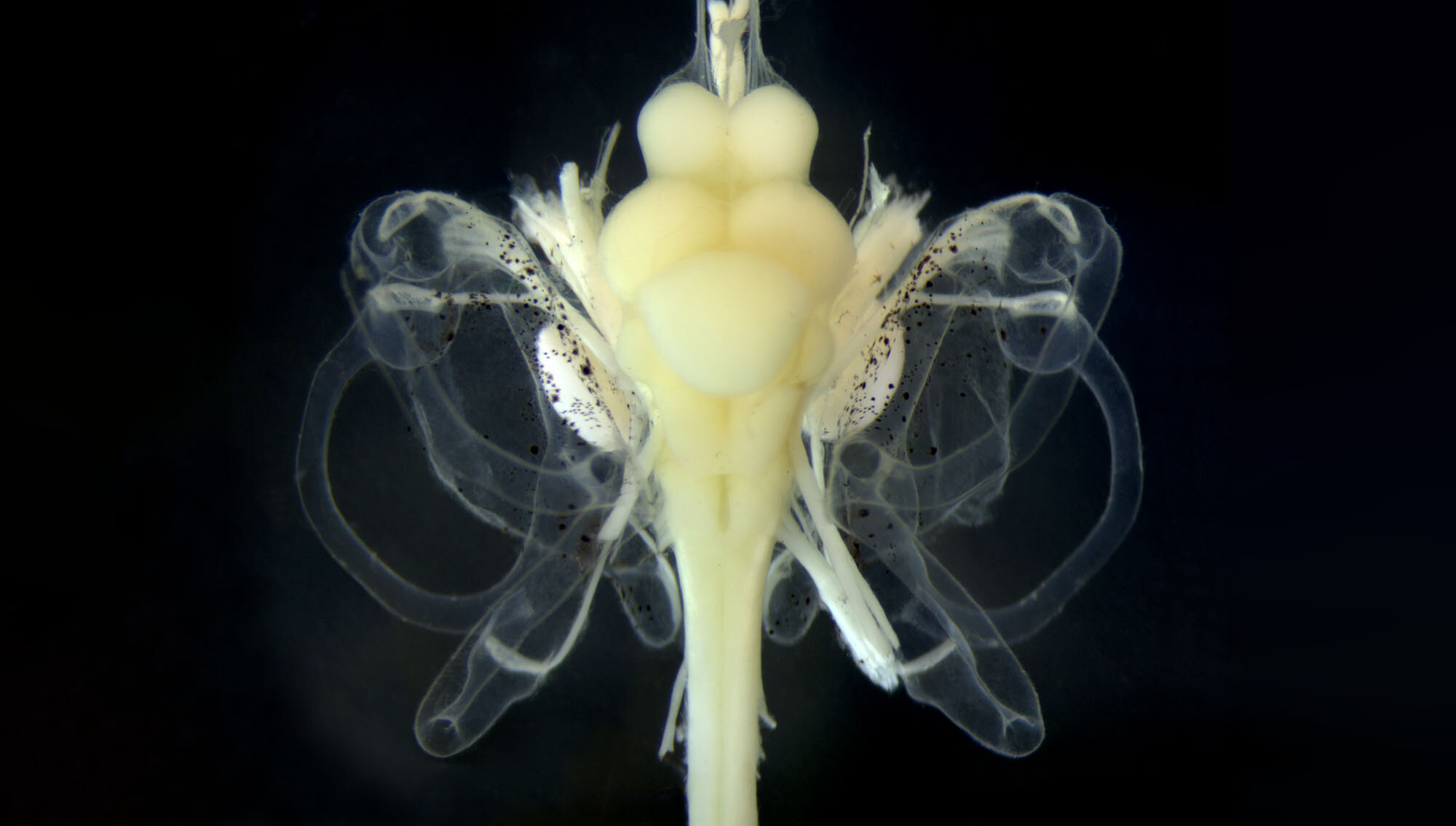
Fish Bioacoustics & Anthropogenic Sound
Dr. Arthur N. Popper
Professor Emeritus, Department of Biology, University of Maryland
To learn a bit more about me, see this article from Acoustics Today
(Background figure courtesy of Xiaohong Deng)
I am “retired” from the University of Maryland (and no longer take students). However, I continue to engage in research and collaboration. Please explore these web pages to learn about my current and past research, my consulting, and my editorial activities.
My latest publications are listed here
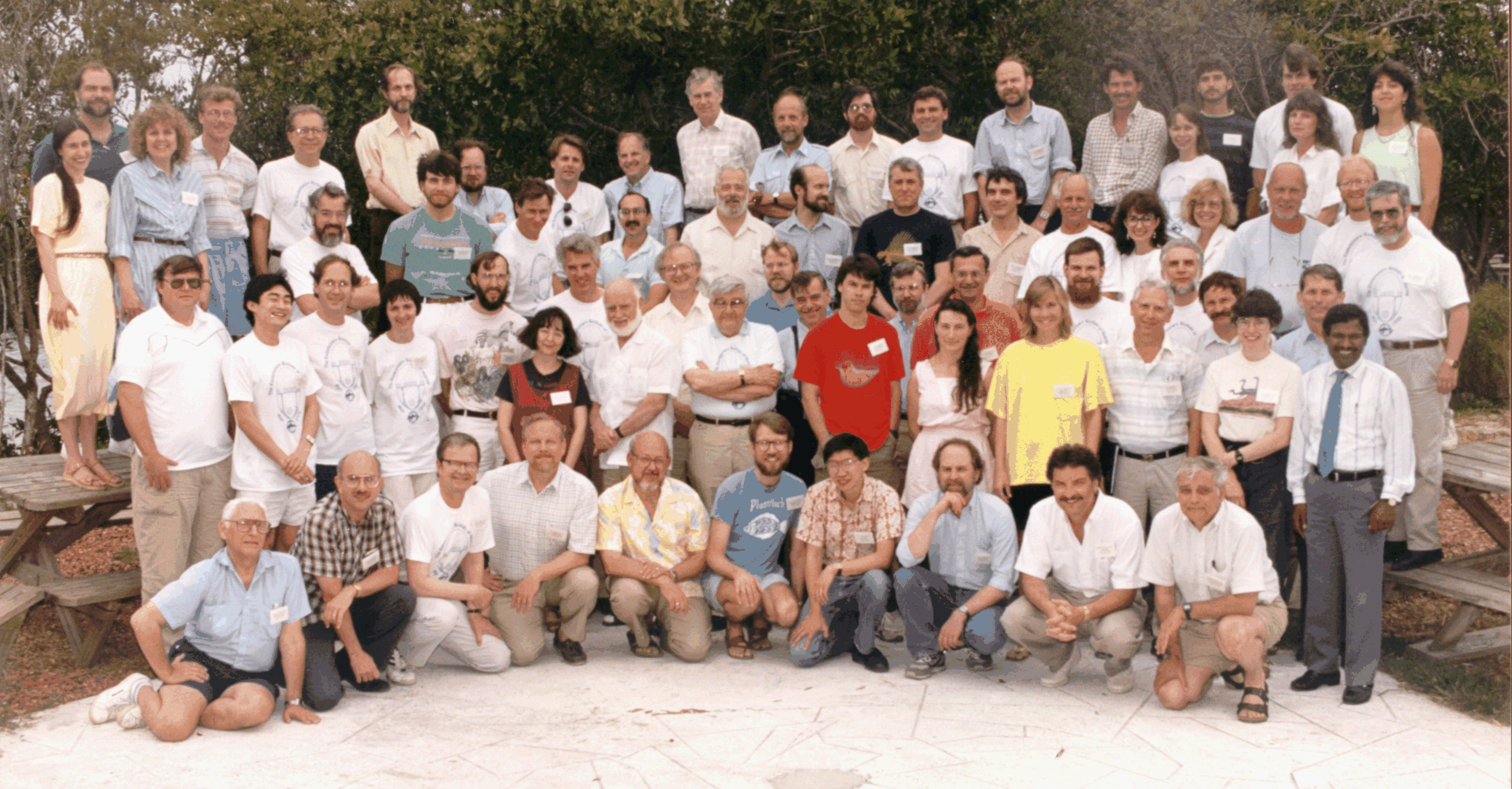
(The background image is from a meeting I organized along with Doug Webster, Bill Tavolga, and Dick Fay in 1990 at the Mote Marine Laboratory in Sarasota, FL on The Evolutionary Biology of Hearing. To see the picture better and perhaps try and identify the participants click here.)

Basic Research
Much of my research has focused on the general area of fish bioacoustics. That is, the study of sound and fishes. I have studied fish hearing, evolution of hearing, the structure and function of the fish (and vertebrate) auditory system, and acoustic behavior of fishes. I have also done some work on marine mammals and sharks. You can find more information about my work on this page and in my full CV. (Drawing of hair cell distribution in a deep-sea fish utricle. Courtesy of Dr. Xiaohong Deng.)

Anthropogenic Sound
My current research and consulting work focuses on understanding the effects of anthropogenic (man-made) sounds on aquatic life. This work includes conducting research on how various anthropogenic sounds might affect fish. I also consult with organizations around the world on the potential effects of various anthropogenic sound sources including (but not limited to) wind farms, pile driving, seismic air guns, shipping, etc. I am also involved in development of guidelines and criteria for potential effects of anthropogenic sounds on fishes.. (Cover from Popper et al., 2014)
_________________________
I am co-founder, along with my great colleague and friend Tony Hawkins, of the Effects of Noise on Aquatic Life, a series of international meetings that examine how human-made anthropogenic sound may affect aquatic life. These meetings continue every three years, but Tony and I have stepped down as leaders, but remain informal advisors to the organizing committee.

Editing
I am editor of the science magazine Acoustics Today.
____________________
I have stepped down as co-editor of the Springer Handbook of Auditory Research, a series of 77 volumes (to date!) on many aspects of auditory neuroscience and related areas. Dick Fay and I founded SHAR in 1991. The series will continue with Allison B. Coffin and Joseph A. Sisneros as series editors.